Off-road motorcycle tire demand in 2026 is moving in two directions at once. Youth and mini-moto classes continue to expand in many markets, while full-size motocross and trail riding keep generating steady replacement volume. For distributors, importers and OEM buyers, that split changes which sizes turn over fastest and how wide a single product range needs to be.
Mini and Full-Size Fitments Are Not the Same Business
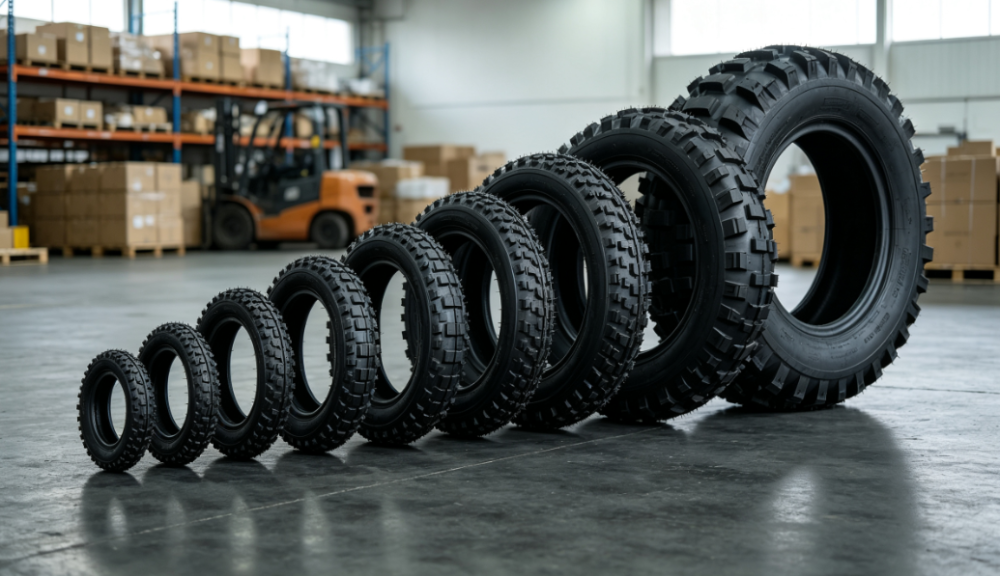
Small-bore machines dominate entry-level and youth segments, and they typically run on 12-inch and 14-inch fitments. These sizes move through dealers who serve families, riding schools and training tracks, where purchase cycles are shorter and riders often change bikes within a season or two. Full-size motocross and trail motorcycles, by contrast, rely on 18-inch and 19-inch fitments. Demand there is driven by replacement cycles, terrain type and how intensively riders train or race.
Stocking only one end of that spectrum limits a distributor's reach. Dealer networks that support both a youth program and adult riders tend to order across both groups, often within the same shipment.
A Single Range Across Multiple Sizes
The Wanda Tyre P2002 off-road motorcycle tire is offered in a size set that spans both segments: 90/100-12, 90/100-14, 110/100-18, 120/100-18 and 110/90-19. For buyers, the commercial value of a consolidated range is straightforward:
One supplier and one brand identity across mini and full-size fitments.
Simpler container planning when several sizes ship together.
Fewer sourcing relationships to manage for dealers serving mixed rider groups.
Consistent packaging and labelling across the range, which helps at the counter.
These are practical advantages rather than performance claims. The tire still has to suit the terrain and riding style it is sold into.
Application Insight by Size
90/100-12 and 90/100-14: mini motocross, youth training bikes and smaller trail machines, usually sold through dealers located near riding schools and family-oriented tracks.
110/100-18 and 120/100-18: full-size enduro and trail motorcycles, where riders look for traction on mixed surfaces and predictable wear.
110/90-19: full-size motocross fitments, common in markets with active race calendars and regular practice tracks.
Terrain matters as much as size. Hard-pack, intermediate and soft conditions call for different tread priorities, so distributors should map their local riding surfaces before committing to a size mix.
What Importers and OEM Buyers Should Confirm
Before adding any off-road range, buyers generally want clarity on tread pattern and compound choice, casing construction, sidewall markings and the technical documentation that accompanies each size. Sample evaluation on local terrain remains the most reliable way to judge fit for a specific market. OEM and private-label buyers usually also review packaging, branding requirements and the ability to keep specifications consistent across multiple sizes within one program.
For 2026, the practical takeaway is that off-road tire ranges reward breadth. A supplier able to cover mini fitments and full-size motocross fitments from one production base gives distributors more room to serve dealers without multiplying their inventory relationships.